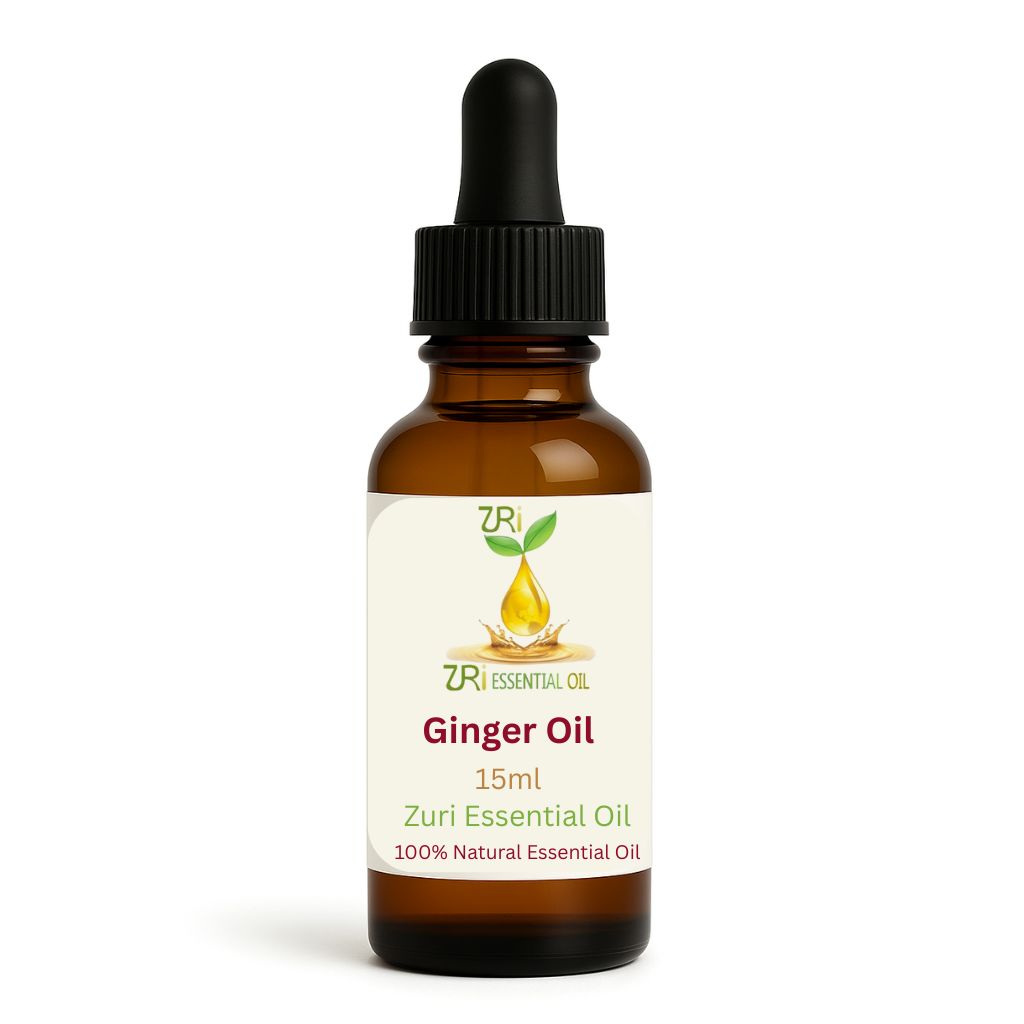
Ginger Essential Oil is a powerful and warming oil extracted from the fresh or dried rhizomes (roots) of Zingiber officinale. It is well known for its warm, spicy, woody, and slightly sweet aroma, and its strong stimulating, digestive, and therapeutic properties.
This oil has been used for centuries in Ayurveda, traditional medicine, aromatherapy, and perfumery, especially for its ability to relieve pain, improve digestion, and boost circulation.
Ginger Oil is also valued in natural perfumery for adding warmth and spicy depth to fragrance blends.
Physical Component Standards
| Parameter |
Specification |
| Appearance |
Clear liquid |
| Color |
Pale yellow to amber |
| Odor |
Warm, spicy, woody |
| Specific Gravity @ 20°C |
0.870 – 0.890 |
| Refractive Index @ 20°C |
1.480 – 1.495 |
| Optical Rotation @ 20°C |
−20° to −45° |
| Solubility |
Soluble in alcohol and oils |
Major Chemical Components
-
Zingiberene
-
Beta Sesquiphellandrene
-
Alpha Pinene
-
Beta Bisabolene
-
Camphene
These compounds provide its stimulating and therapeutic benefits.
Benefits & Uses
Pain Relief Benefits
Digestive Benefits
Respiratory Benefits
Aromatherapy Benefits
-
Boosts energy
-
Improves mental strength
-
Helps reduce stress
Perfumery Benefits
Applications & Usage
Ginger Essential Oil is widely used in:
-
Massage Oils
-
Pain Relief Products
-
Aromatherapy
-
Perfumery
-
Ayurvedic Formulations
-
Pharmaceutical Industry
Safety Instructions
Product Documents
No PDF file available for this product yet.



 FSSAI
FSSAI
 HALAL
HALAL
 IEC
IEC
 MSME
MSME
 SPICE BOARD
 FDA
FDA
Reviews
There are no reviews yet.